







Laser welding came to the Collision Repair Tools & Equipment hall. Here's what a collision shop should know before buying one.
A handheld laser welder was on display in the Collision Repair Tools & Equipment hall at SEMA this year. It's a real tool with real uses. We don't think a body shop is one of them yet, and we'd rather explain why than let the demo do the talking.
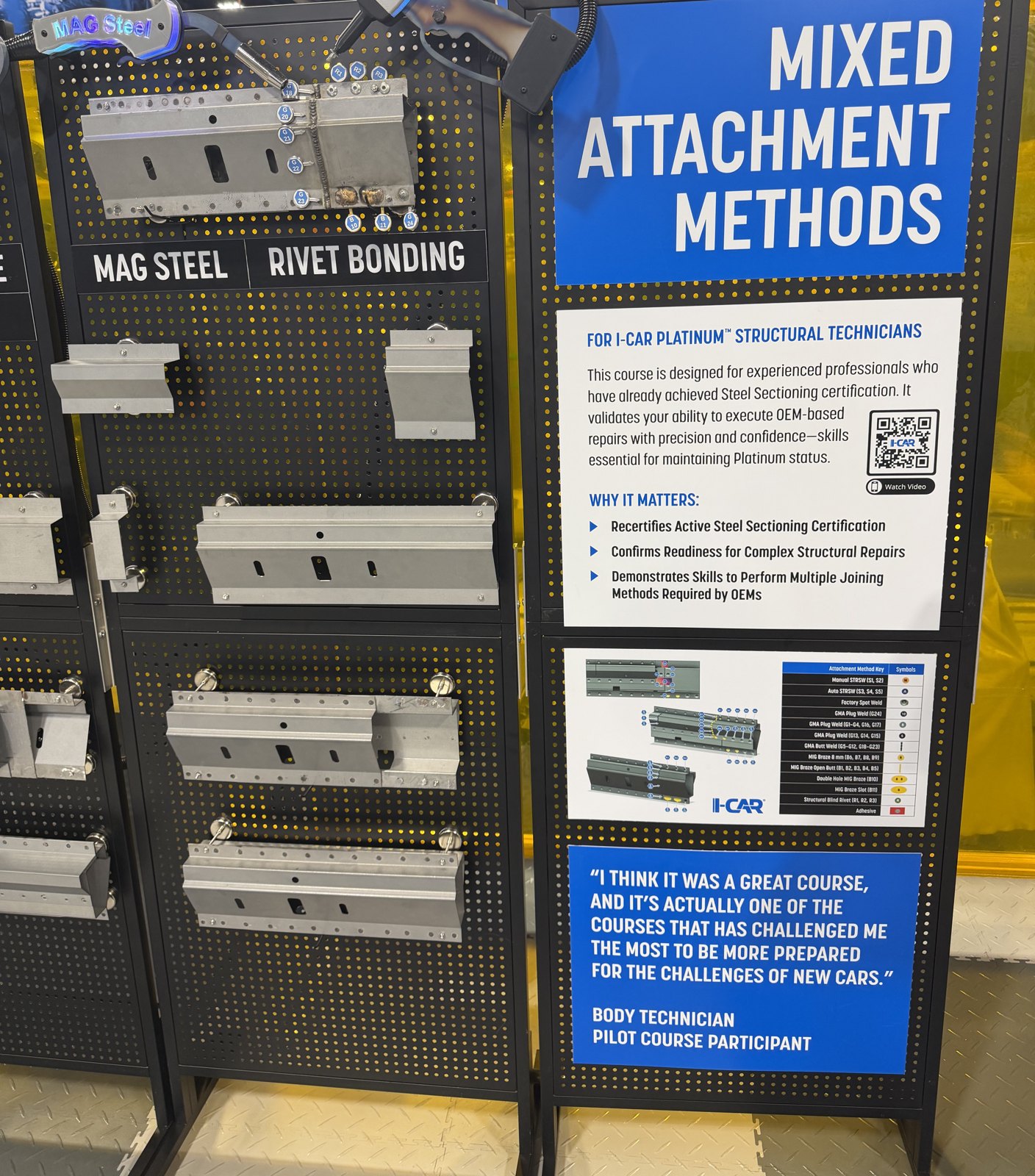
Start where the procedures start. I-CAR's own display shows the joints a structural tech is expected to make today. A laser isn't on it.
We didn't walk every aisle of SEMA this year; nobody does. But we spent our time in the collision-repair equipment hall, and in that hall one brand was showing a handheld laser welder to body-shop owners. We watched the demo and read the sheet. What follows is what we'd tell a customer who asked us about it across the counter.
1.No OEM repair procedure approves it. Not yet.
A collision repair is done to the vehicle maker's published procedure. The procedure says which joint goes where, with what process, at what settings. It's what the insurer pays against and what protects you if the car is ever in a courtroom. As of this show, no automaker has written handheld laser welding into a structural repair procedure.
"No OEM currently approves laser welding for collision repair."BodyShop Business, "Laser Welding: A Reality One Day in Auto Body Shops?"
I-CAR describes its own position as continuing research: comparing handheld welds to OEM joints and working with OEMs toward validation. That's the right way to do it, and it may well get there. But research is not approval, and a shop that laser-welds a rail section today is the one who approved it. That's the part a demo doesn't mention.
2.The speed numbers come from a different kind of weld.
A welding-equipment maker published a laser-vs-MAG-vs-TIG comparison this month, and the speed chart went everywhere: laser roughly 1.5 to 2 times faster than MAG, 8 to 10 times faster than TIG. Those are real measurements, taken on 200 mm fillet welds on flat, clean steel plate, 1 to 3 mm thick. That's a fabrication test, and it's a fair one for a fabrication shop.
The line under the speed chart is the one worth reading:
The laser weld is about a third the size of the MAG weld, with a third of the metal in the joint. That's a big part of why it's faster: there's less weld. Whether a weld that size is the right weld for a boron-steel B-pillar is exactly the question the OEMs haven't answered. Until they do, "faster" isn't an argument. It's a description of a smaller weld.
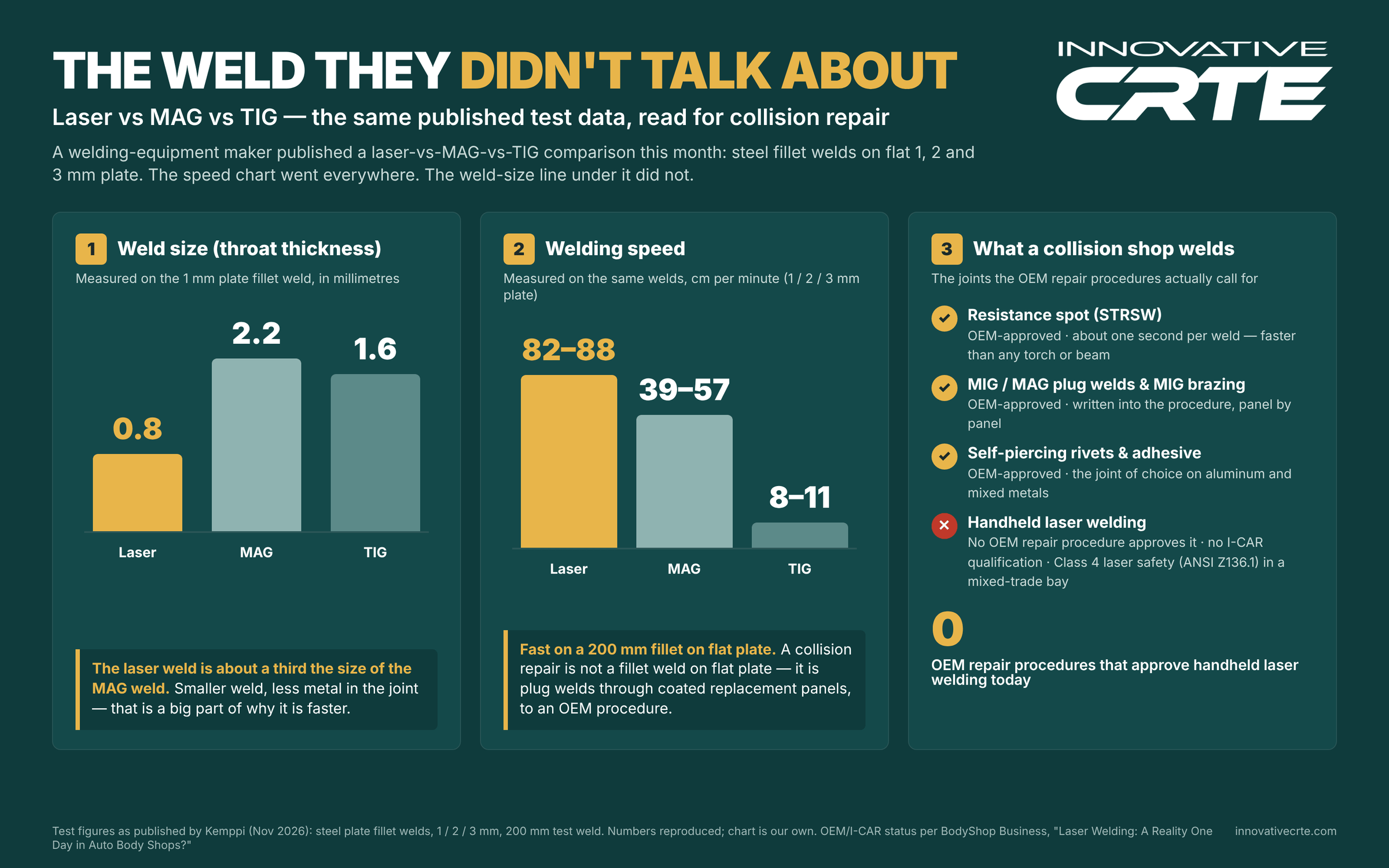
And in a body shop the fastest approved joint already exists. A resistance spot weld takes about a second. Nothing with a torch or a beam is beating that on the joints the procedures call for.
3.We've been here before. It was called TIG.
Anyone who's been in collision for a while remembers why TIG never took hold in the body shop, even though TIG makes a beautiful weld. Two reasons, and they're the same two reasons this time around. The first is fit-up: TIG wants clean, tight, well-prepared joints, and repair joints rarely are. The second is the environment. TIG is a bench process. It wants a fixed station, clean metal, the part brought to the welder. Collision welding is the opposite: the technician brings the welder to the joint, on the lift, inside a quarter, under a dash, half of it overhead. There is no fixed welding area in a body shop, and there never will be, because the car doesn't come apart to suit the welder.
4.Fit-up is the whole game.
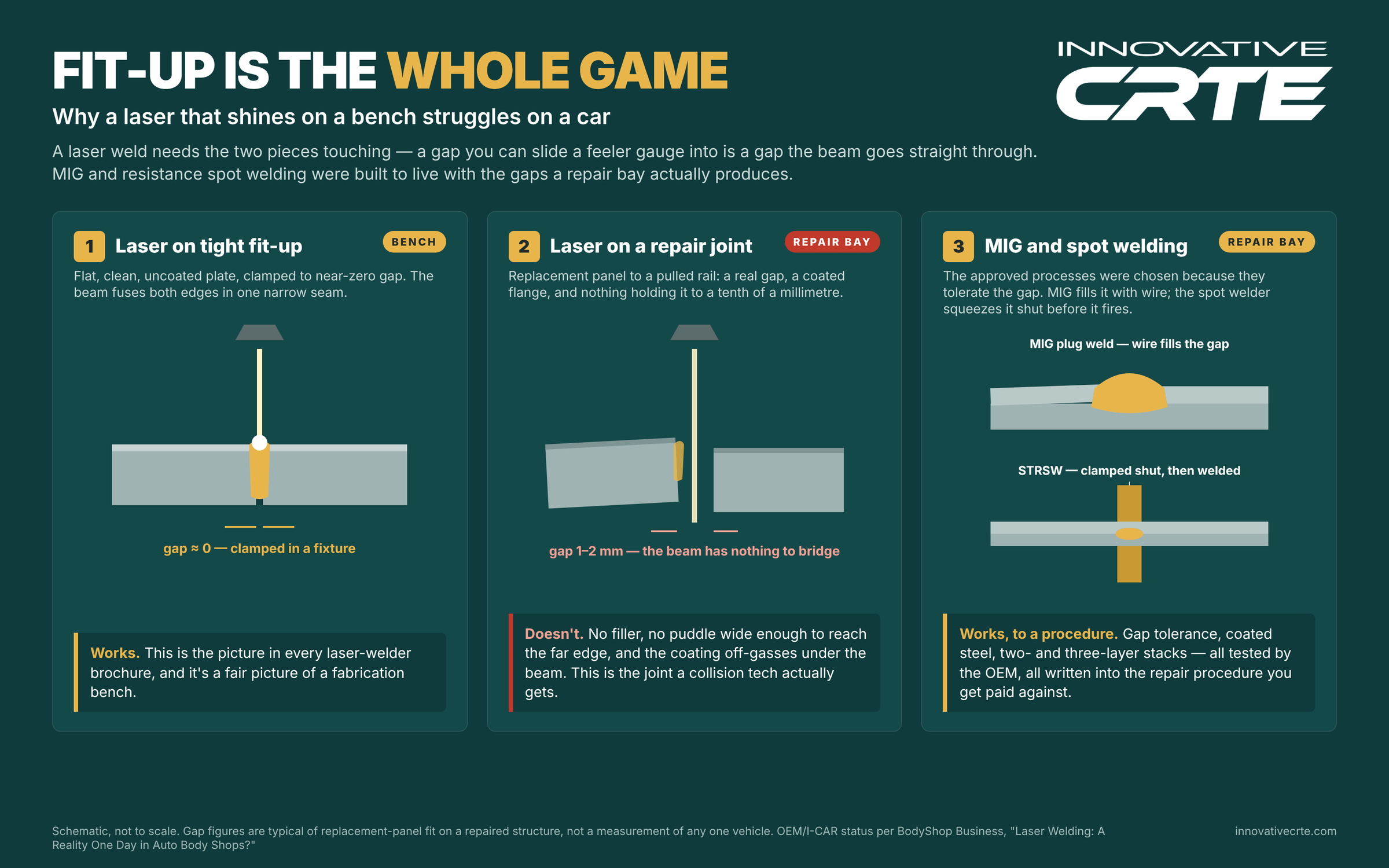
A laser weld needs the two pieces touching. A gap you can slide a feeler gauge into is a gap the beam goes straight through, because there's no wire filling it and no puddle wide enough to reach the far edge. A production line gets near-zero gaps because the parts were stamped to fit and clamped in a fixture. A repair bay gets a replacement quarter from the parts department, a rail that was pulled back to spec, and a sectioned pillar that was cut with a saw. That's gap-bridging work, and it's why MIG/MAG plug welds, MIG brazing and resistance spot welding have stayed on the board for twenty years.
5.It's a Class 4 laser in a mixed-trade bay.
Handheld laser welding runs under ANSI Z136.1, and the part of that standard nobody mentions at a demo table is the room. A Class 4 laser needs a controlled area, and a controlled area is a built thing: laser-rated barriers or curtains around the work, every window covered or fitted with filtered laser-safe glazing, matte non-reflective surfaces, an interlocked or posted entry, and laser-rated eyewear for everyone inside the line. The reason is simple. A fiber laser is an invisible near-infrared beam. You can't see it, it bounces off bare metal and aluminum, and the reflection does the same damage to an eye that the beam does. Then add ventilation for the fumes, because zinc-coated steel, which is most of what you repair, off-gasses under the beam.
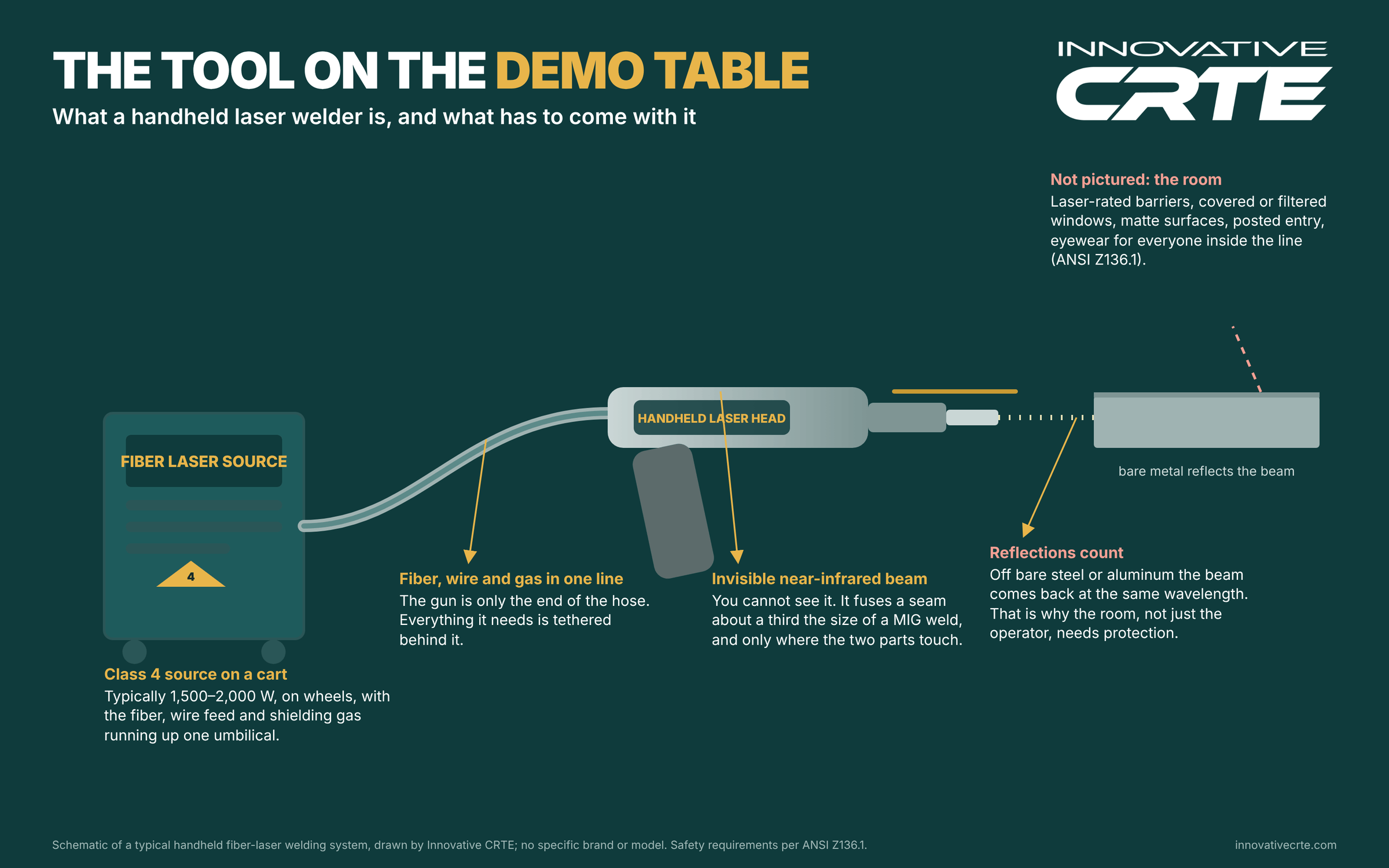
Now put that controlled area around a car on a lift, with a painter, a detailer, an estimator with a tablet and a customer looking for his car all within forty feet. The weld moves around the vehicle; the curtains, the glazing and the controlled area would have to move with it. That's a very different room from a laser cell, and the safety plan has to be written before the first weld, not after the first claim.
6.Where it was shown is part of the message.
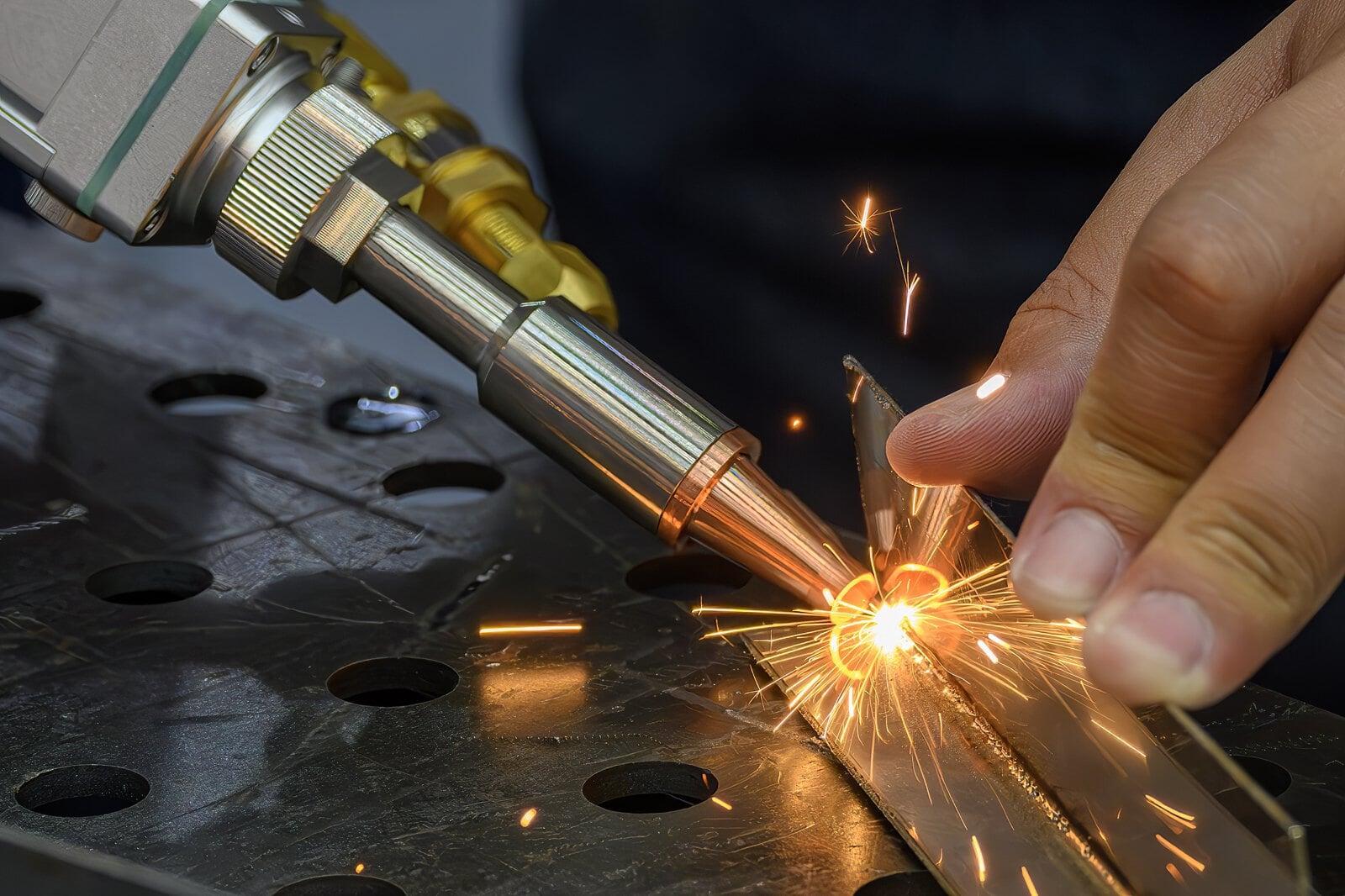
Let's be fair to it: a handheld laser is great eye candy. It's quiet, it's clean, there's almost no spatter, and a crowd forms around the demo table the way a crowd forms around a welding robot. It's catchy for the same reason automation is catchy, and it's impractical for a collision shop today for the same reason automation is: the technology is real, the production-line version of it is proven, and the repair-bay version of it doesn't exist yet. Automakers laser-weld with robots, fixtures, enclosed cells and a process engineer who tuned the parameters on that exact stack of metal. A handheld unit also has real work to do in fabrication, custom builds, the exhaust shop and the race shop.
Our concern isn't the tool. It's that it was shown in the Collision Repair Tools and Equipment hall, to shop owners, as if the procedures and the safety questions were already settled. They aren't, and a shop owner walking that hall deserves to hear that from somebody.
What we'd actually put in your bay
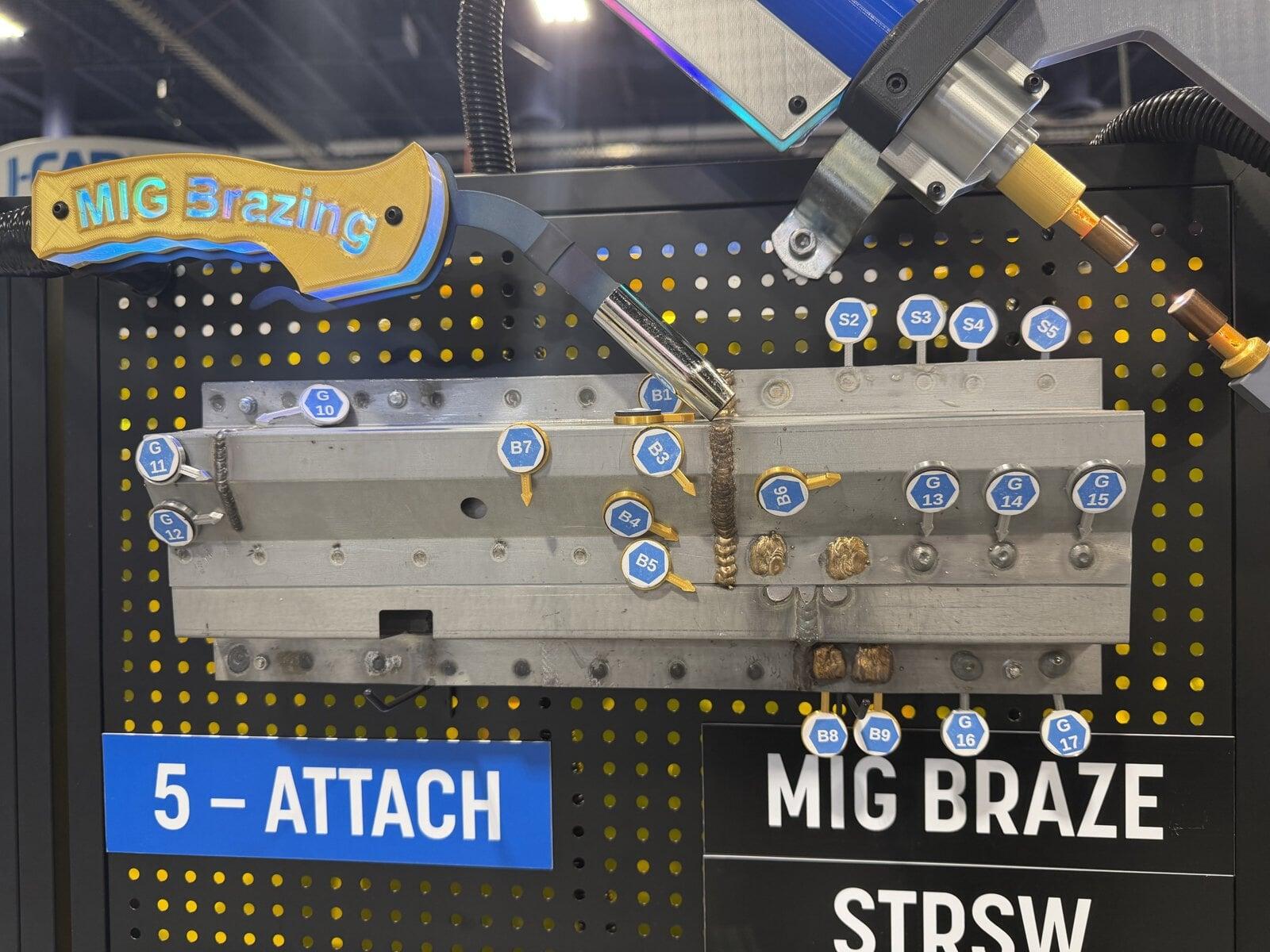
We've been installing and servicing collision joining equipment in New Jersey, New York and Pennsylvania for a long time, and we sold other brands of spot welders before we sold the ones we carry now, so this isn't brand loyalty talking. It's what's on I-CAR's board:
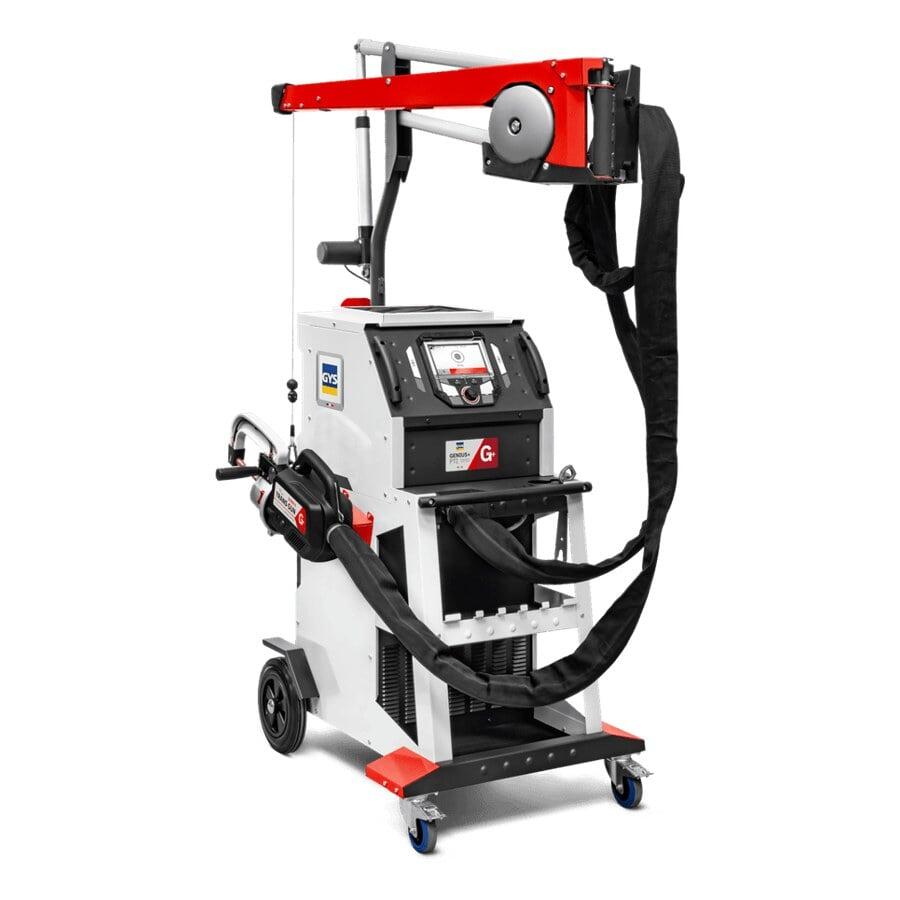
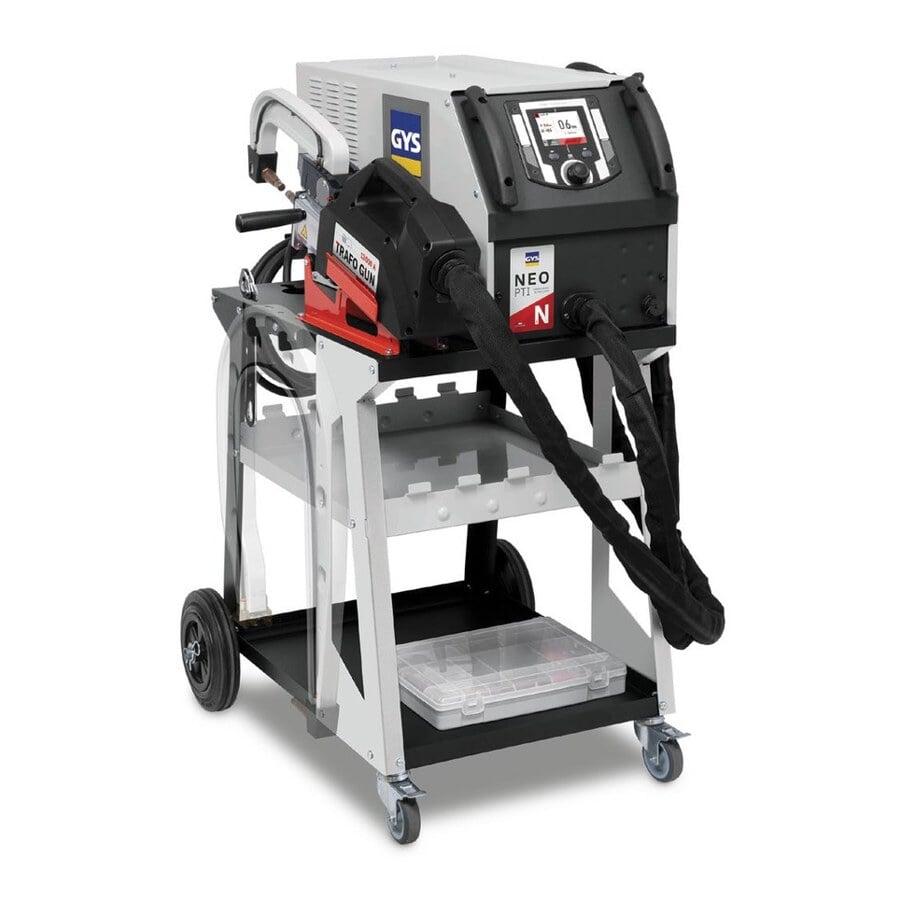
- ✓Resistance spot weldingOEM-approved, about a second a weld. The PTI Genius Plus and the PTI NEO are what we put on the truck.
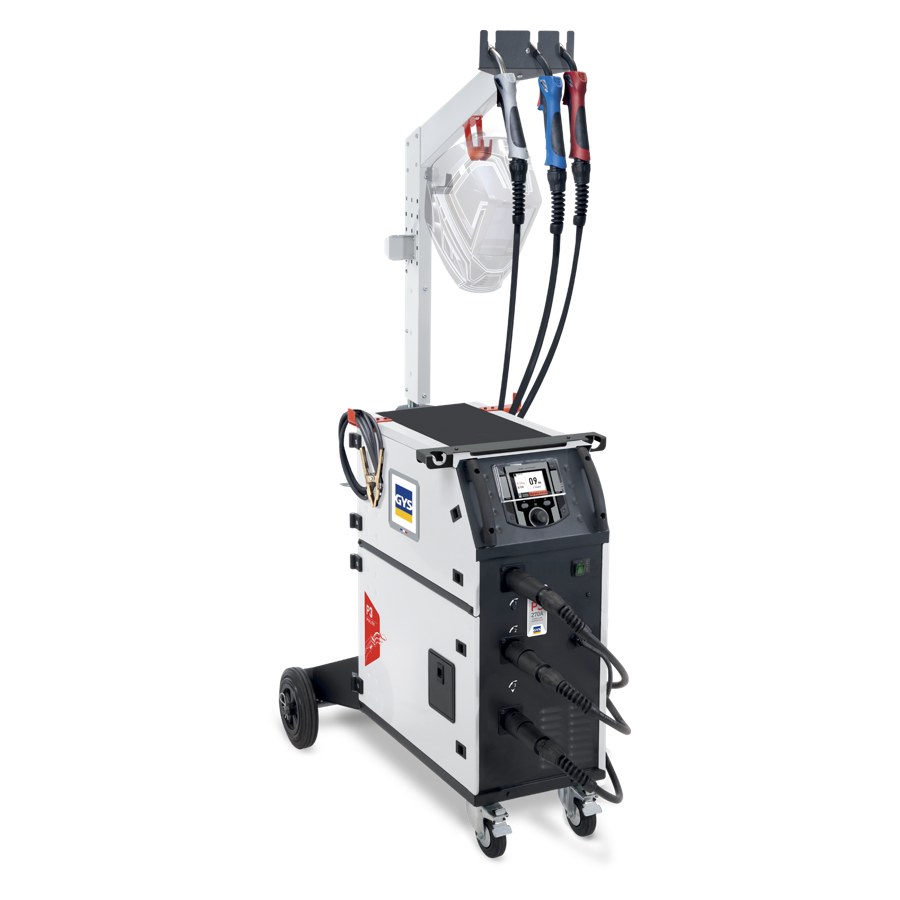
- ✓MIG/MAG and MIG brazingThe new P3 270A covers steel, aluminum and silicon-bronze on one machine.
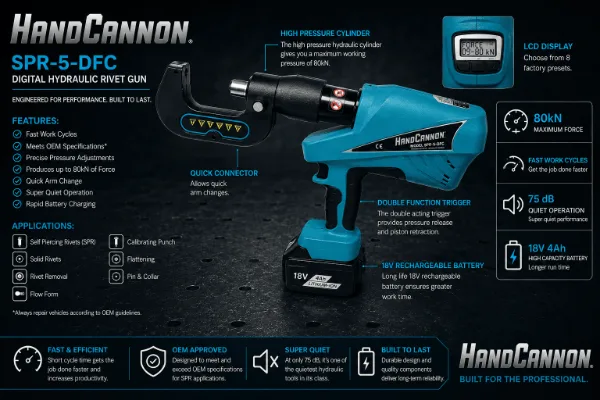
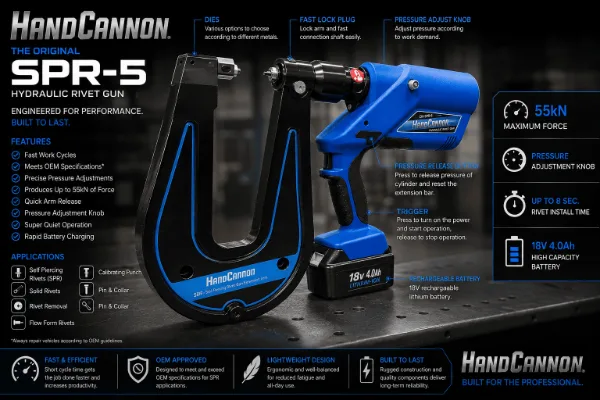
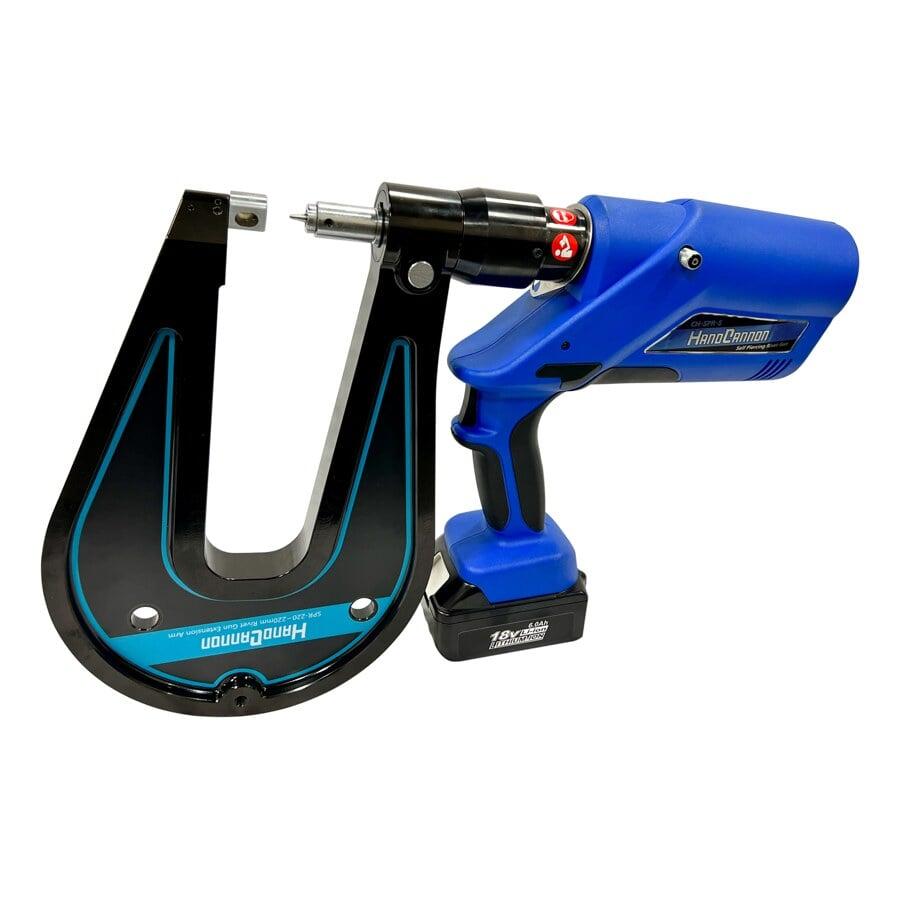
- ✓Self-piercing rivets and adhesiveThe Hand Cannon SPR gun for aluminum and mixed-metal structures where the procedure says rivet.
- ✕Handheld laser weldingNo OEM repair procedure. No I-CAR qualification. Class 4 laser safety in a mixed-trade bay. Not yet, and we'll tell you the day that changes.
Every one of those is on an OEM procedure today. When an automaker writes the procedure for handheld laser welding, we'll be the first to sell it to you, train you on it and install it. Until then, the fastest weld in collision repair is the one the OEM approved.
The approved joints, quoted the same day.
Tell us what you're welding and which procedures you're working to, and we'll quote the PTI Genius Plus, PTI NEO, P3 270A or Hand Cannon the same day. Members see their pricing on the store; sign in or ask us for an account.
Sources: I-CAR Mixed Attachment Methods display, SEMA Show 2026 (our photos). BodyShop Business, "Laser Welding: A Reality One Day in Auto Body Shops?" Kemppi, "The Real Cost of a Weld," November 2026 (test figures reproduced; charts are our own). ANSI Z136.1, Safe Use of Lasers.
