







Professional pull clamps for modern collision repair
Forged pull clamps for structural pulling, anchoring, straightening, and controlled repair work — built for body shops that need dependable grip, premium construction, and purpose-built options for real-world pulling scenarios.
- Forged steel, 4- to 10-ton ratings
- Self-locking & replaceable-tooth models
- 12-month manufacturer warranty
- Made in Bologna, Italy
Structural correction demands more than raw power.
In modern collision repair, the pull has to stay controlled from start to finish. The Stanzani Clamps Line is engineered for precision geometry, forged steel durability, and the kind of dependable grip professionals need on today's high-strength steels and aluminum.
- Secure bite under load — no slipping, no repositioning
- Clamp geometry matched to flange shape, access, and pull angle
- Forged construction for daily production work
- Serviceable, replaceable teeth on key models
- A system of clamp styles, not one clamp forced into every job


The Stanzani Clamps Line
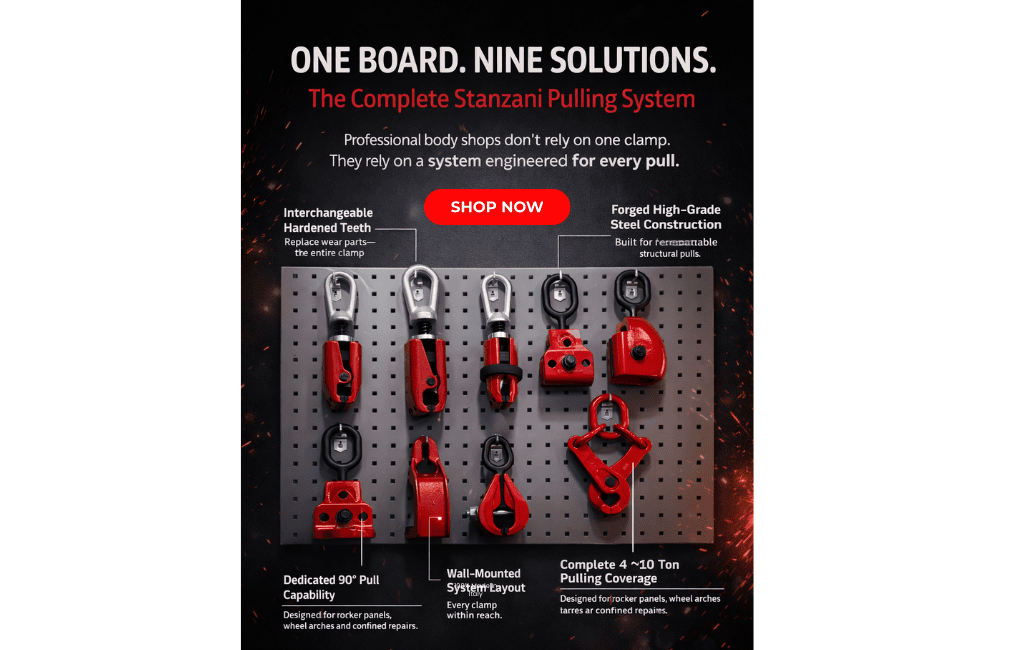
Nine purpose-built pull clamps. Each one is designed for a specific pickup point, access condition, and pull direction — so the right clamp is on the board when the job calls for it.

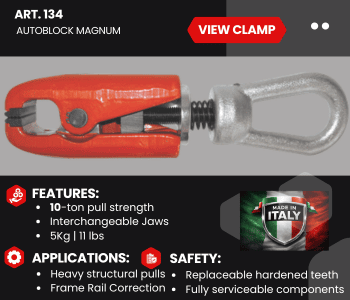
Autoblock Magnum
Heavy-duty self-locking clamp for demanding frame rail correction and serious structural pulling applications.

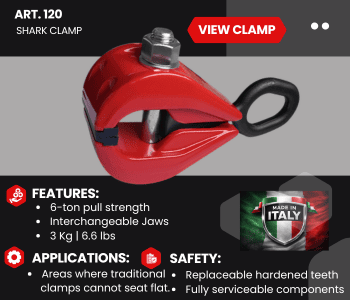
Shark Clamp
Deep-reach profile for protruding flanges, awkward structural pickup points, and hard-to-access pulling situations.

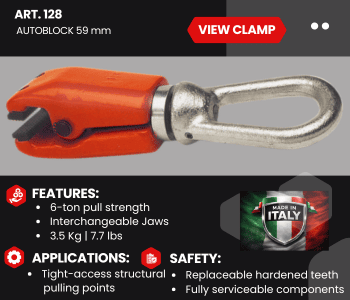
Autoblock 59mm
Engineered for heavy structural pulls on frame components where secure bite and reliable holding power matter.

Right-angle Clamp
Purpose-built for controlled 90-degree pulls on rocker panels, edges, and difficult structural repair points.

Skuba Clamp
Fast, secure self-locking clamp for straightening applications where quick setup and dependable grip are critical.

Rapidhook
Compact hook-style pulling solution for fast attachment, alignment work, and efficient setup in active repair environments.

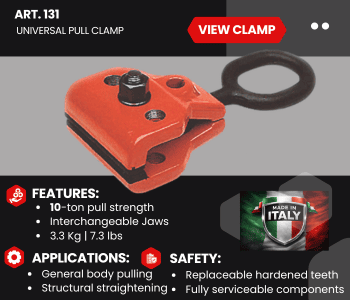
Universal Clamp
Suitable for general body pulling and structural work with a versatile design built for multiple repair scenarios.

Swivel Clamp
Multi-directional forged steel clamp designed to help manage changing pull angles with stable grip and control.

Pull Plier
Compact forged pull plier for tight-space repairs, localized pulling points, and smaller corrective applications.
Stanzani 9-Piece Clamp Board Complete
The ultimate structural pulling solution. Nine essential Stanzani pulling clamps plus a dedicated wall board — so every clamp style is organized, visible, and ready when the pull calls for it.
- All nine clamps above in one purchase
- Wall board keeps tooling organized and inspectable
- Moves the shop from one-off clamps to a full pulling system
- Broader coverage across pull angles, flanges, and access conditions

See Stanzani Clamps in Real Repair Environments
Real-world examples of the clamps in use — geometry, access, bite position, and how each clamp style fits a different pulling situation on the shop floor.

Skuba Clamp
Fast, secure self-locking attachment for demanding frame-straightening and structural correction work.
Autoblock 59mm
Built for heavy structural pulls where reliable bite, holding power, and stable engagement matter.

Shark Clamp
Deep-reach design for protruding flanges, difficult pickup points, and awkward pull access.
Right-angle Clamp
Purpose-built for controlled 90-degree pulls in rocker, flange, and edge repair scenarios.

Swivel Clamp
Helps manage changing pull directions while maintaining stable grip and cleaner alignment.

Universal Clamp
A versatile solution for general body pulls, flat panel work, and structural straightening.

Rapidhook
Compact, fast-attachment hook solution for efficient setup and quick alignment corrections.

Pull Plier
Compact forged pull tool for tight-space work, localized pulling points, and smaller corrections.
Modern Pull Clamps vs. Legacy Systems
Pull clamps designed decades ago may not account for modern metallurgy, thinner panels, or the load paths in today's vehicles. Here is where a modern, system-based clamp line separates itself.
| Feature | Stanzani Clamps Line | Traditional Systems |
|---|---|---|
| Material | High-strength steels and performance-focused construction on select components | Older heavy steel designs with less refinement |
| Grip Design | Modern jaw profiles with serviceable / replaceable teeth on select models | Often non-serviceable teeth or less efficient bite design |
| Application Range | Specialized clamp options for different pull angles and access conditions | More limited general-purpose use |
| Shop Efficiency | System-based organization with the 9-piece board option | Often mixed loose tooling with less consistency |
| Modern Metals | Engineered for high-strength steel and aluminum structures with OEM-aligned procedures in mind | Designed around older, thicker mild-steel construction |
| Support | Sold and supported in the USA by CRTE — parts, guidance, and a 12-month warranty honored as written | Varies by seller |
Built for the way structural repair actually happens
Choosing the right collision repair pull clamp matters when your shop is performing structural correction, frame straightening, anchoring, panel pulling, and heavy-duty realignment work. The Stanzani clamp line is built for professional technicians who need dependable grip, forged durability, controlled pulling performance, and clamp options that match real-world repair conditions.
From self-locking pull clamps and right-angle clamps to swivel clamps, pull pliers, and deep-reach structural clamps, this lineup helps body shops choose the right clamp for the right pull — which matters most when pull direction, panel shape, steel type, flange access, and repair geometry all vary from one job to the next.
Whether you are correcting frame damage, pulling rocker panels, anchoring difficult structural points, or upgrading an older pulling setup, Stanzani gives collision repair professionals a premium clamp system designed for safe, repeatable, high-confidence results.
Why clamp selection matters
The wrong pulling clamp reduces grip, damages repair surfaces, slows setup, and compromises control during the pull. The right clamp improves holding power, pull-direction stability, technician confidence, and workflow consistency across the shop floor.
What body shops look for in a professional pull clamp
- Secure bite under load, so the clamp holds the pull without slipping or repositioning.
- Clamp geometry matched to the job — flange shape, repair access, and pull angle.
- Durable forged construction for repeated structural use in demanding repair environments.
- Serviceability on key models, including replaceable teeth where applicable.
- Organized system buying, so multiple clamp styles are ready instead of forcing one clamp to do every job.
That is one reason the Stanzani 9-piece clamp board is such a strong solution. It moves a repair facility from one-off clamp ownership into a complete pulling system with broader coverage across repair types.
Pull Clamp Safety and Best Practices
Professional collision repair clamps are designed for serious load-bearing work, which means safe setup and correct use are critical. Clamp performance is about selecting the correct style, verifying secure positioning, matching the clamp to the repair point, and maintaining control throughout the pull.
| Safety Topic | Best Practice |
|---|---|
| Clamp Selection | Choose the clamp style that best matches the repair point, access condition, and pull direction. Do not force one clamp type into every scenario. |
| Surface Engagement | Make sure the clamp is seated correctly on the intended structural point and that the grip area is appropriate for the clamp design. |
| Visual Inspection | Inspect the clamp before use for worn teeth, visible damage, deformation, or other signs that service or replacement may be needed. |
| Controlled Pulling | Apply pulling force in a controlled, deliberate manner. Avoid shock-loading, rushed setup, or unstable pull paths. |
| Technician Awareness | Maintain clear work zones and make sure the repair setup is stable before load is applied. |
| Maintenance | Keep clamps clean, inspect moving parts where applicable, and replace serviceable wear items on models designed for maintenance. |
Important: Always follow your shop's repair procedures, pulling equipment guidelines, OEM repair requirements, and technician safety protocols when using structural pulling clamps and anchoring equipment.
Frequently Asked Questions About Stanzani Clamps
What are Stanzani clamps used for?
Gripping, anchoring, and pulling damaged vehicle structures during controlled correction work in collision repair and structural straightening.
Are they suited to modern collision repair?
Yes. The line is designed for professional body shop use where access, control, and repeatable pulling performance on modern metals matter.
Do I need different clamps for different pulls?
Yes. Different repair points and pull angles call for different clamp designs — which is why shops benefit from several styles instead of one general-purpose clamp.
Why do replaceable teeth matter?
On applicable models, replaceable teeth restore grip performance and extend service life without replacing the entire clamp assembly.
What is the benefit of a self-locking clamp?
Faster setup and higher holding confidence in appropriate applications — the clamp maintains secure engagement under load.
What is the advantage of the 9-piece board?
A wider range of clamp options in one organized system, so technicians work faster and pick better tooling for each repair.
Which clamp is best for heavy structural pulling?
It depends on the repair point and pull configuration, but higher-capacity models like the Autoblock Magnum, Right-angle Clamp, and Universal Clamp are commonly suited to demanding applications.
Can these clamps improve repair workflow?
Yes. The right clamp for the task reduces setup frustration, minimizes repositioning, improves pull stability, and makes structural work more efficient.
Stop adapting the wrong clamp to the wrong job.
Many repair facilities start with a limited assortment of older pulling tools and gradually realize they are spending too much time forcing the wrong clamp onto the wrong pickup point. Upgrading to a complete clamp system improves repair versatility, technician productivity, and consistency from one structural repair to the next.
Stanzani stands out because it combines professional-grade construction, purpose-built clamp designs, and the ability to build a complete pulling solution around the way real collision shops work. For teams ready to move beyond basic clamp ownership into an organized, system-driven setup, the Stanzani line is a strong fit.

Looking for the best Stanzani deal available right now?
Check clearance, open box, and preowned equipment before you buy — and join CRTE Members free to unlock lower pricing that is applied automatically at checkout.
More Stanzani Resources
Quick links to the rest of the Stanzani lineup, parts, coverage, and pricing help.
Stanzani Tools Line
Controlled heating, panel manipulation, and the precision operations modern repair environments require.
Stanzani Parts & Accessories
Every Stanzani accessory and replacement part carried by CRTE — including replacement teeth for serviceable models.
Stanzani Warranty
12 months of manufacturer coverage from the invoicing date. See what is included, what voids it, and how to start a claim.
Request Pricing
Tell us your bench or frame system and the vehicles you repair, and we will help you build the right Stanzani clamp setup.
Not sure which clamps fit your setup?
Tell us what bench or frame system you run, the vehicles you repair most, and what pulling problems keep costing you time. We will point you to the right clamps — and tell you honestly if you do not need the whole board.
